You can’t design what you haven’t seen!
- Ardebili Engineering

- Sep 4, 2025
- 3 min read
In the fast-paced world of renovation and retrofit projects, deadlines rule the day. Teams juggle evolving client demands, limited budgets, and increasingly compressed design schedules. In all that noise, one step often slips through the cracks, and the entire project pays the price for it later:
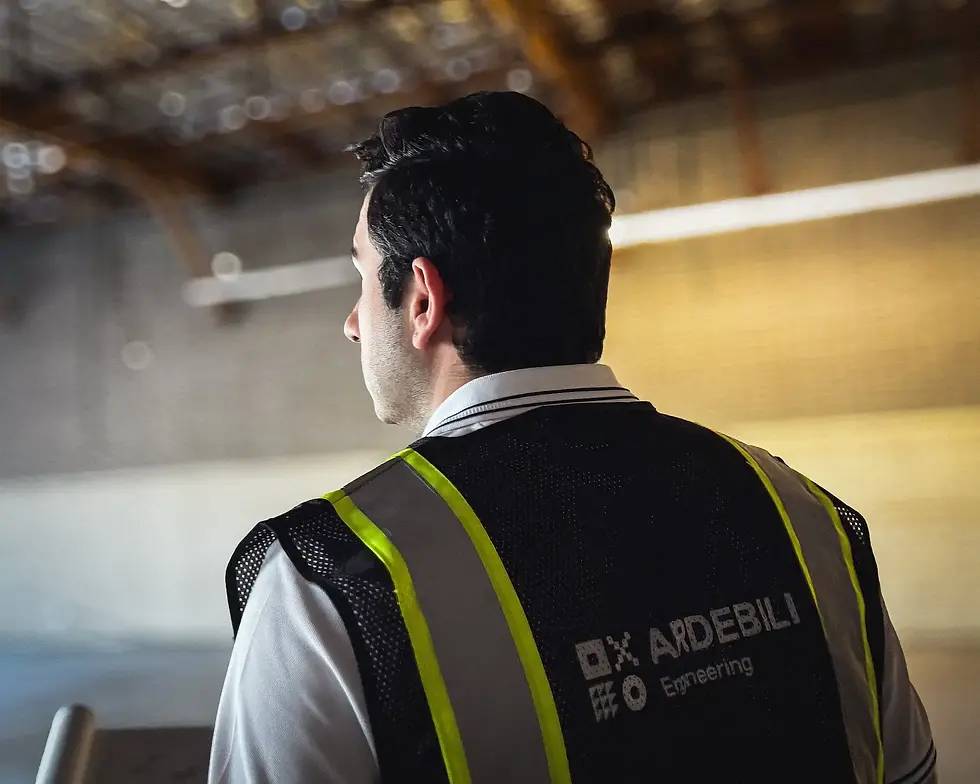
Visiting the site
Yes, we have laser scans. Yes, we have BIM. And yes, we can reference archived as-builts. But none of these can fully replace what a skilled engineer can learn from standing in the space, observing conditions firsthand, and understanding how a building actually breathes.
When that opportunity is skipped or minimized, the impact shows up quickly.
What architects are really saying
We’ve heard it before, and we know architects mean it when they say:
“It’s like the MEP team designed this in a vacuum.”
And they’re not wrong. When MEP systems clash with existing beams, equipment requires unexpected demolition, or ceiling heights in the model don’t match the site frustration builds. Coordination starts to feel like triage rather than collaboration.
The worst part? These issues don’t arise from poor intent or lack of technical skill.
They usually stem from one thing:
A lack of firsthand understanding of existing conditions.
Why this happens more than it should?
Let’s be honest. Many MEP teams are under pressure to move quickly. With multiple overlapping deadlines, it’s tempting to lean on whatever digital data is available rather than stepping away from the screen and into the field.
It’s easy to assume that an old drawing set, a scan, or a model will “probably be good enough.”
But the reality is:
Archived as-builts are rarely complete.
Laser scans still require human interpretation.
Scans don’t always capture elevation constraints, access paths, or hidden utilities.
When we don’t verify, we’re making assumptions. And in existing buildings, assumptions are dangerous. No two spaces are the same and surprises in the field are more common than not.
Our approach: we design with the field in mind
At Ardebili Engineering, we don’t treat site visits as optional. We treat them as foundational.
Here’s what sets our approach apart:
We go early. We prioritize site walks at the very beginning of design. This allows us to catch major issues before they show up in our models not after.
We send the right people. Field verification isn't just a checkbox; it’s a responsibility. Our experienced engineers, the ones making design decisions, go on-site themselves. They’re not just collecting data. They’re interpreting, questioning, and bringing back insights that shape the way we design.
We collaborate on the ground. We don’t show up solo. When possible, we walk the site alongside architects, GCs, and trade partners to align early on expectations, constraints, and opportunities.
The result? Fewer late-stage conflicts, better informed models, and designs that feel grounded because they are.
What architects notice (and appreciate)?
When MEP engineers take the time to truly understand the space they’re designing for, the difference is obvious:
✅ Systems fit where they’re supposed to.
✅ Coordination meetings become smoother.
✅ Design changes are minimized.
✅ There’s less finger-pointing during construction.
We’ve had architects tell us:
“You saw things that weren’t on the plans and caught them before they became a problem.”
That’s the level of trust we aim to build not just with our partners, but with the process itself. Because when the MEP team shows up early and stays engaged, everything downstream becomes easier.
Let’s design like we’ve been there, because we have.
If you’re tired of running into surprises that could’ve been avoided… if you’ve had to redesign around systems that never should’ve been placed where they were… or if you’ve ever felt like your MEP team was guessing from behind a desk, we’re here to change that.
Let’s start by walking the space together.
Want to see how we design with the field in mind? Let’s talk.
Comments